Managing Sidekiq from VS Code

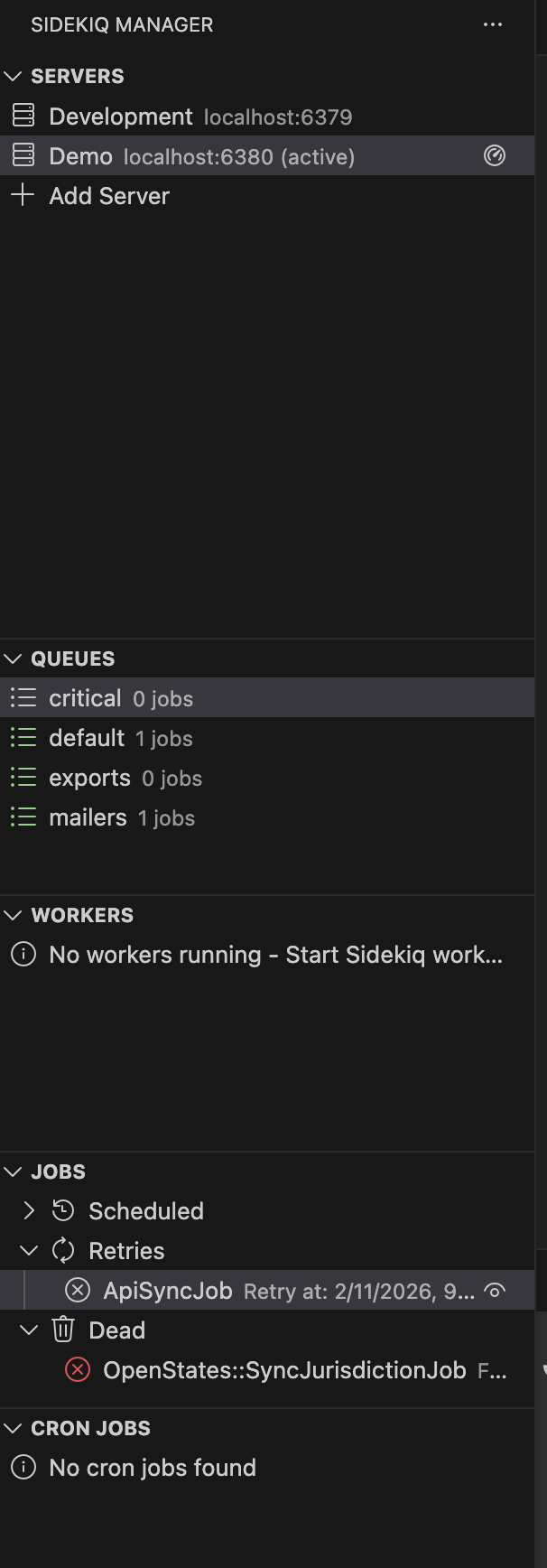
I built a VS Code extension called Sidekiq Manager that puts the Sidekiq dashboard inside your editor. The Sidekiq Web UI works fine, but it lives in a browser tab, which means leaving the editor and tracking which environment is which. The extension keeps the workflow inside VS Code, with multi-server support so you can move between development, staging, and production without context switching.
Installation
Open VS Code, press Ctrl+P (or Cmd+P on Mac), and run:
ext install antarrb.sidekiq-manager
You need VS Code 1.74.0 or later and network access to a Redis server running Sidekiq.
Connecting to a server
Open the command palette and run "Sidekiq: Connect to Server". Enter your Redis connection details and the extension connects and starts pulling metrics. Credentials are stored in VS Code's built-in secret storage.
You can also configure servers in settings.json:
{
  "sidekiq.servers": [],
  "sidekiq.refreshInterval": 30,
  "sidekiq.theme": "auto"
}
refreshInterval controls how often the dashboard polls for new data, in seconds.
The dashboard
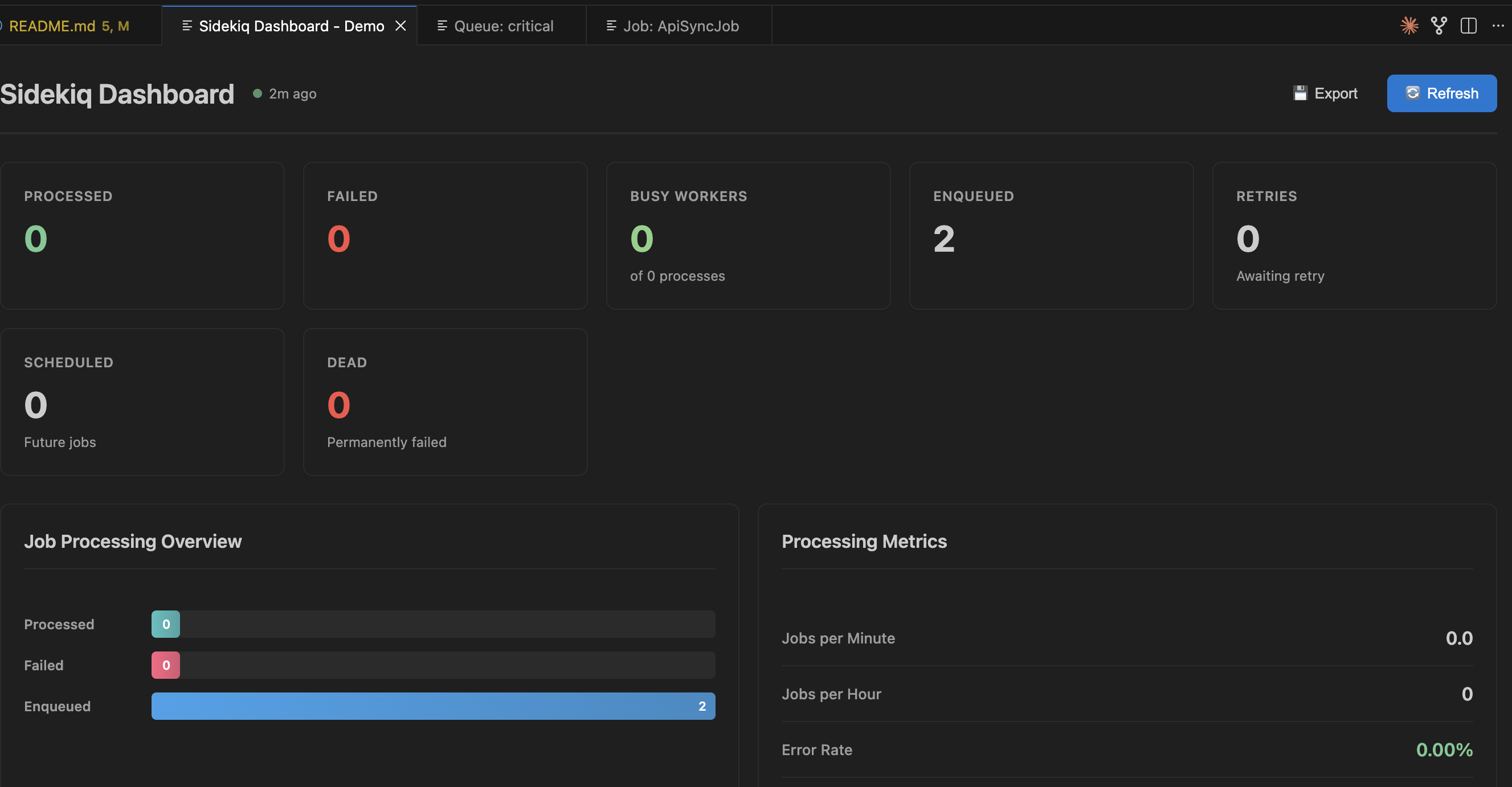
Click the Sidekiq icon in the Activity Bar or press Ctrl+Shift+S to open the dashboard. It shows job processing rates, queue depths, latency, worker status, and failed job counts in real time — the same data as the Sidekiq Web UI, rendered inside a VS Code webview.
Queue and job management
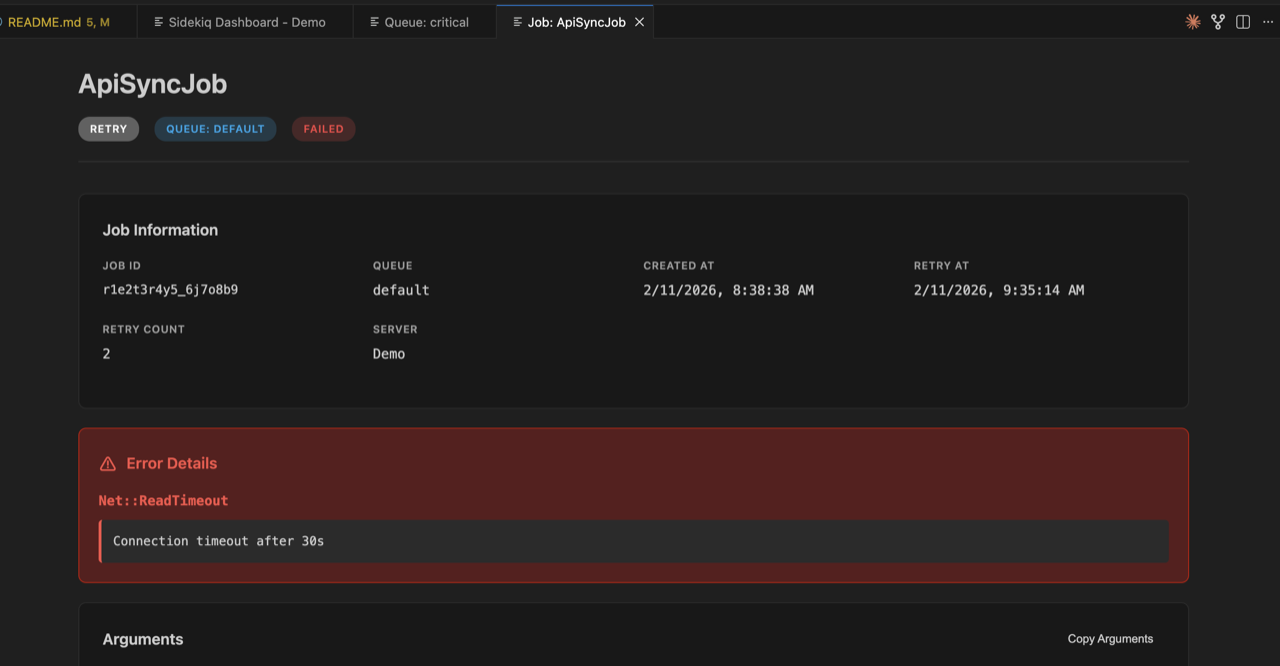
From the dashboard you can view active queues, clear them, and pause or resume processing. Inspect individual jobs to see arguments and error details. Retry or delete failed jobs. Move jobs between queues. Bulk-select with Ctrl+Click for multi-job operations.
Useful keyboard shortcuts:
Delete— delete selected job(s)Ctrl+R— retry selected job(s)Shift+Delete— delete all selected- Right-click for the full context menu
Multi-server support
This is the feature I use most. Connect to development, staging, and production at the same time. The status bar shows the active server. Switch with Ctrl+Alt+S, or jump straight to a specific one with Ctrl+1 through Ctrl+9. Label each server by environment so you always know which one you are looking at.
Worker monitoring
The extension lists active workers, what each is currently processing, and process info. You can gracefully terminate workers from the extension when you need to.
Where to get it
Sidekiq Manager is on the VS Code Marketplace. Source on GitHub. Open an issue there for bugs or feature requests.
The extension is free for noncommercial use under the Polyform Noncommercial License. Commercial licensing is available for businesses.